Skip to content




Key Takeaways
- An engagement ring includes several important parts, including the center stone, accent diamonds, band, prongs, setting, head, gallery, bridge, shoulders, shank, and sizing area.
- Understanding engagement ring anatomy can make it easier to compare styles, communicate with a jeweler, and choose a ring that fits your preferences.
- Small design details, such as pavé diamonds, cathedral settings, hidden halos, milgrain, and engravings, can meaningfully change the look and feel of a ring.
If you’re finding yourself here, it’s likely that you’re one of those rare and intelligent people who do their homework before throwing themselves into an unfamiliar situation. Well, if you want to better understand all the different parts of an engagement ring, you’re in the right place! Having some background information will help you communicate your desires more clearly and gain all the knowledge you need to choose the best ring for you.
Four Basic Terms
First, let’s start with the basics. These four terms will allow you to talk about parts of a diamond ring intelligently and communicate the essentials of ring design and preferences.
Center Stone
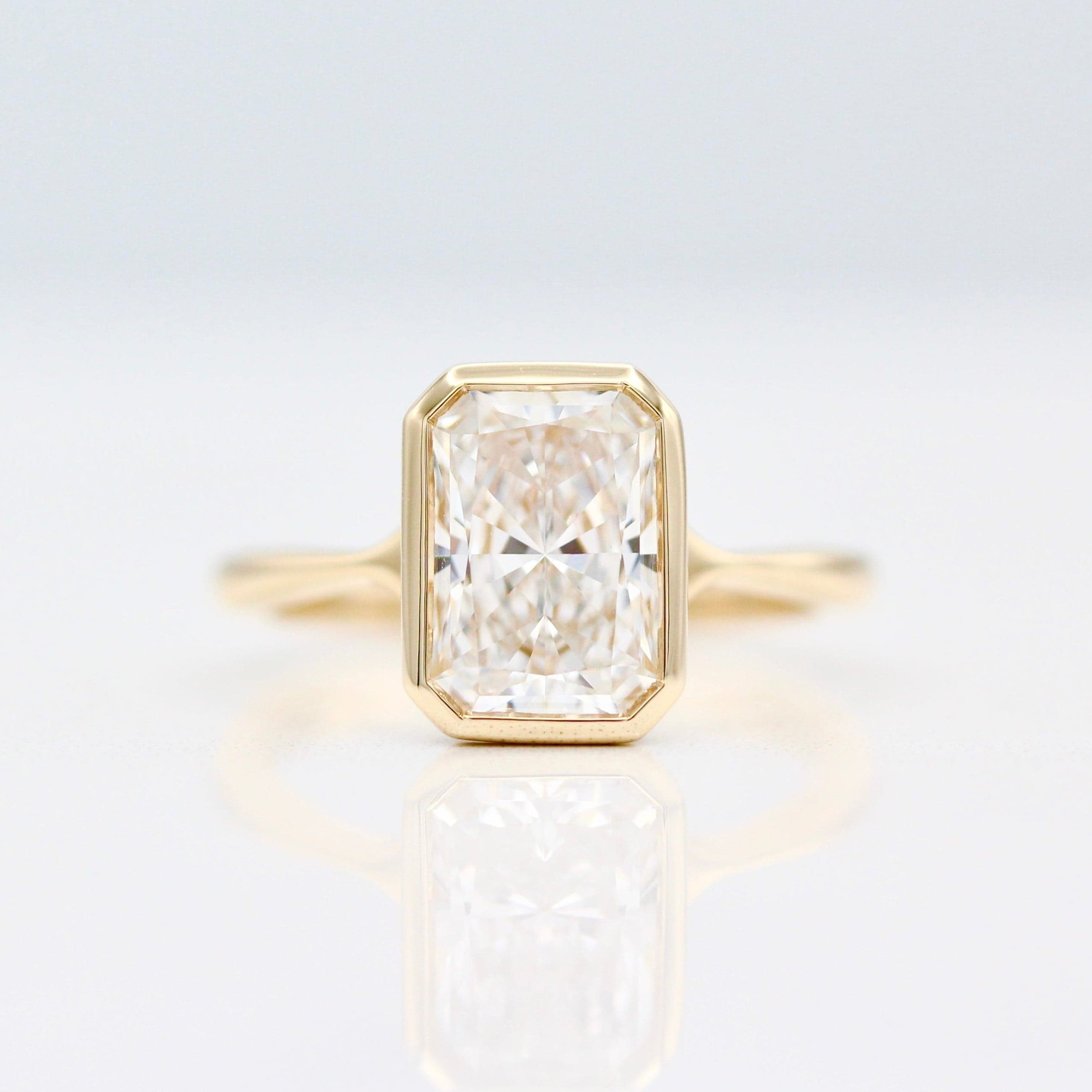
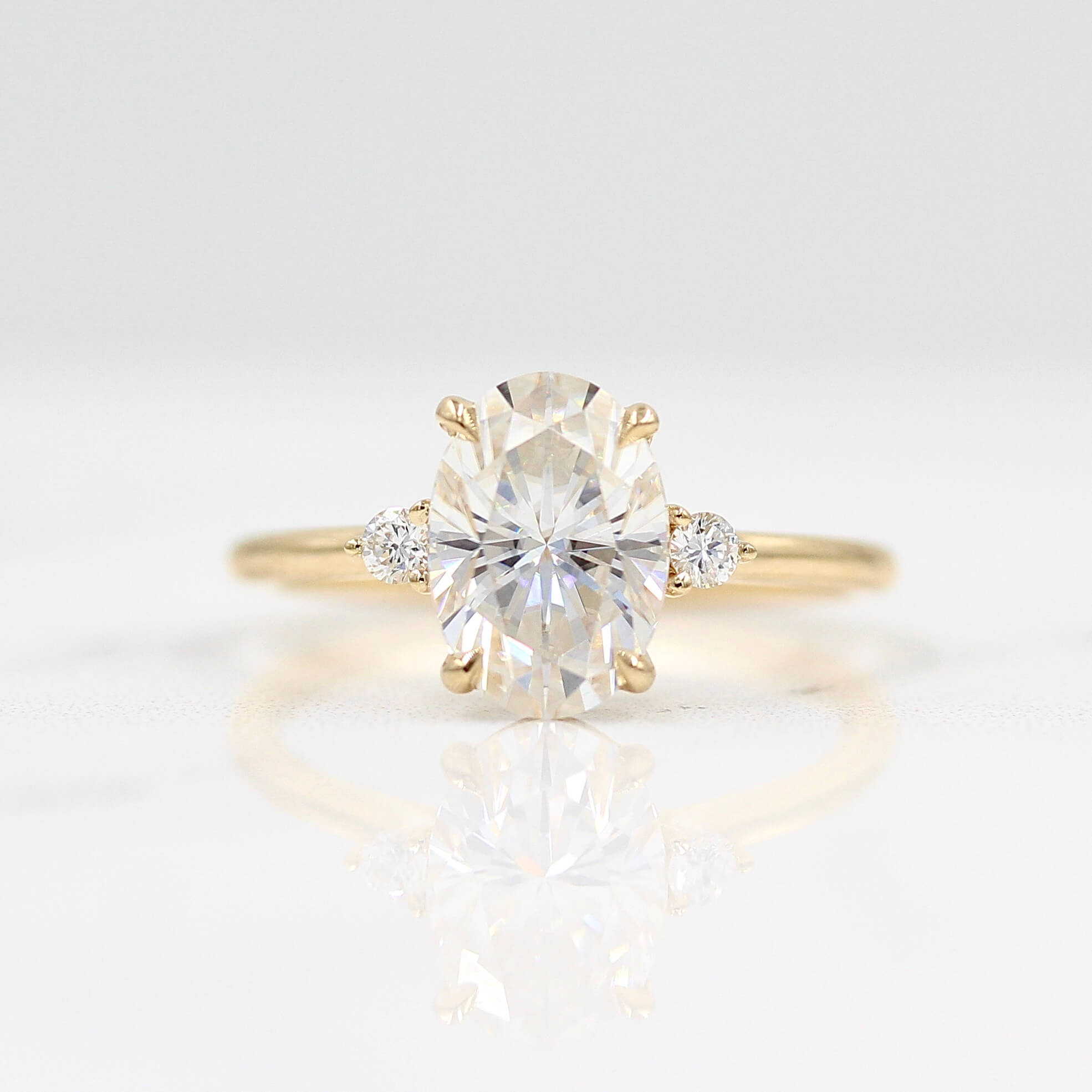
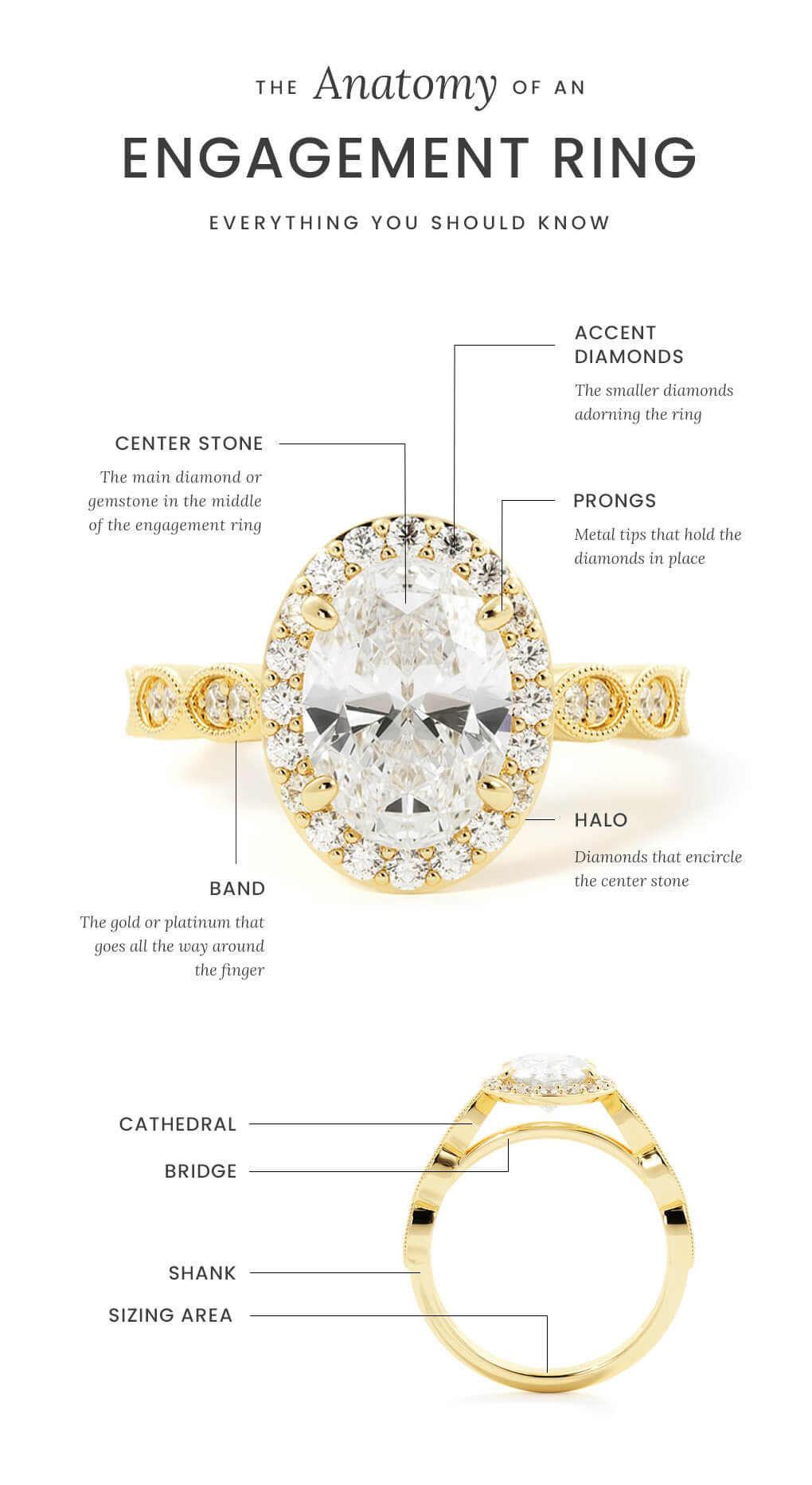
The center stone is the main diamond or gemstone in the middle of the engagement ring. It is the focal point of the ring. The center stone can be a diamond or a different colorless gemstone, like moissanite. It can also be a colored gemstone, like a sapphire, emerald, or ruby. Center stones also come in many different sizes, shapes, and facet arrangements. The most traditional is a round brilliant cut diamond, but oval, emerald, and radiant diamonds are also popular. Whatever center stone you choose, it will be one of the most important and impactful parts of the engagement ring.
Accent Diamonds
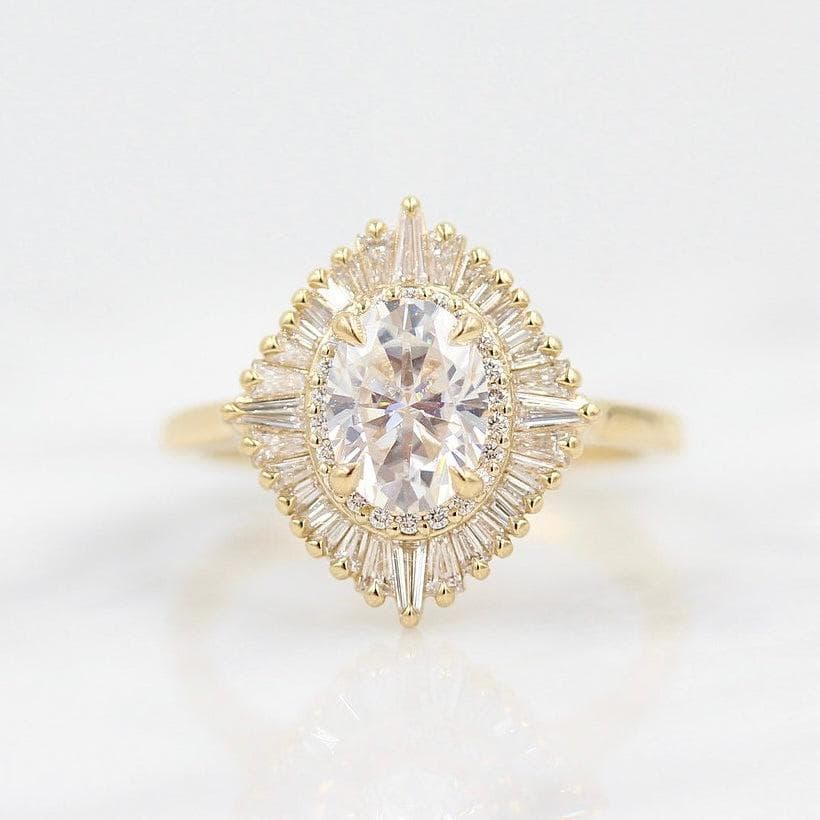
Accent diamonds refer to the smaller diamonds adorning the ring. If there is a diamond on either side of the center stone, those are often referred to as side stones. Accent diamonds can appear around the center stone, next to it, or down the band of the ring. There can even be accent diamonds on the sides of the ring.
Band
The band is the gold or platinum part of an engagement ring that goes all the way around the finger. It might be plain gold, or it might have diamonds set in it. Band width can affect both the look and durability of the ring, so it is worth considering along with the overall design. Some bands are very dainty, and others are wider. Ideally, the band of an engagement ring should be at least 1.5mm wide for daily wear.
Prongs
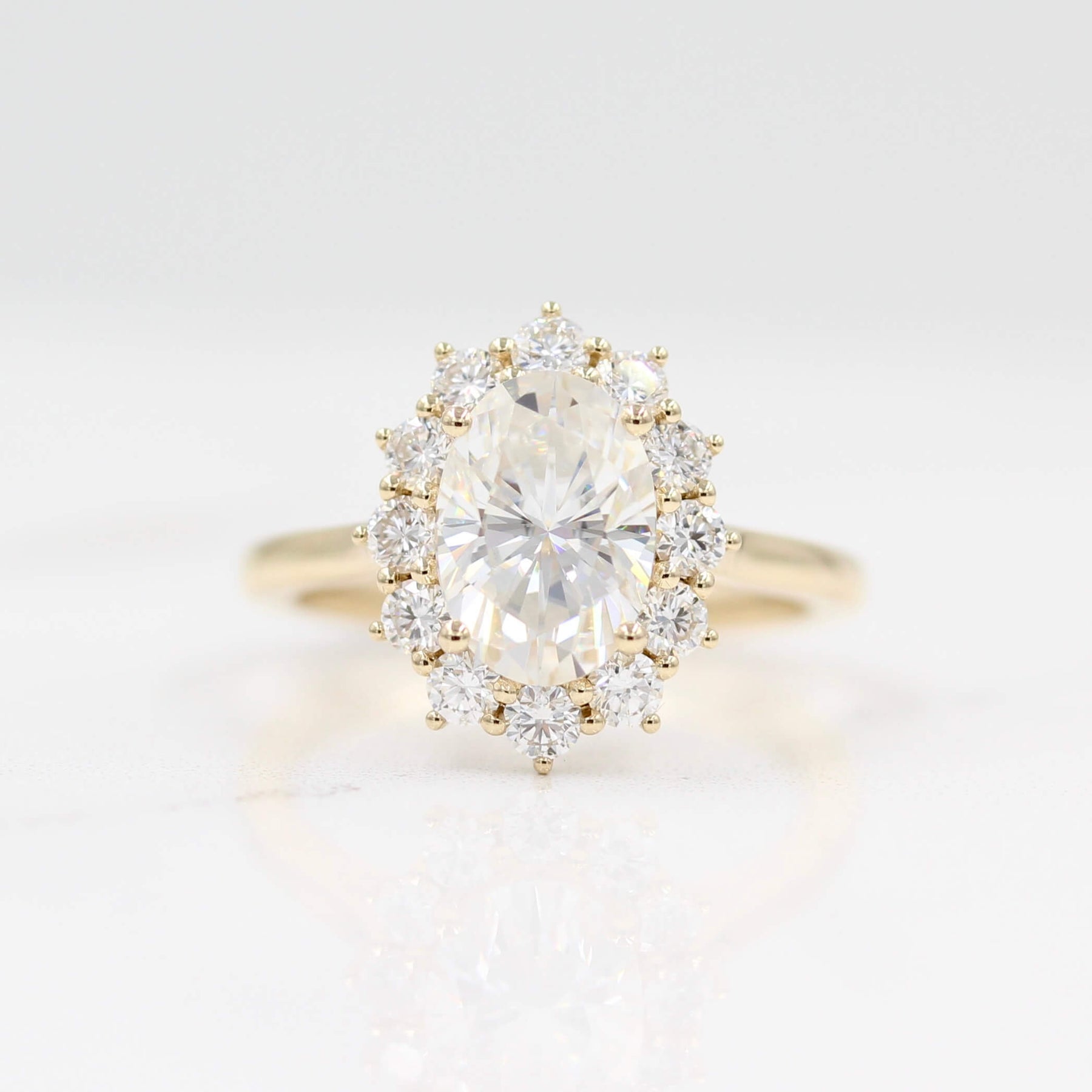
The prongs of an engagement ring are small metal tips that hold the diamonds in place. There are prongs holding the center stone in place (unless it is bezel set–see more below!), but there are also tiny prongs holding all the other diamonds in an engagement ring, as well. Without the prongs, the diamonds would all fall out, making them one of the most important parts of a diamond ring. Prongs can be shaped like circles (these are standard prongs), or they can be shaped like tiny claws.
Advanced Ring Anatomy
Now you’ve learned four essential parts of an engagement ring that you can discuss with your partner, a jeweler, or the internet: center stone, accent diamonds, band, and prongs. But there’s lots more out there to learn– now that you know the basics, you are prepared to move on to the more advanced level of engagement ring terminology. Here we go!

Setting
The setting of an engagement ring includes everything except the center stone. In other words, the setting is the ring design that holds and showcases the diamond or gemstone. Here are a few types of settings:
- Solitaire: Solitaire engagement rings feature the center stone and don’t have additional diamonds or gemstones on the ring. Solitaires are considered the most classic style of engagement ring.
- Bezel: Bezel rings have a rim of gold or platinum around the center stone instead of prongs holding it in. Our Stevie rings are a great example of this style.
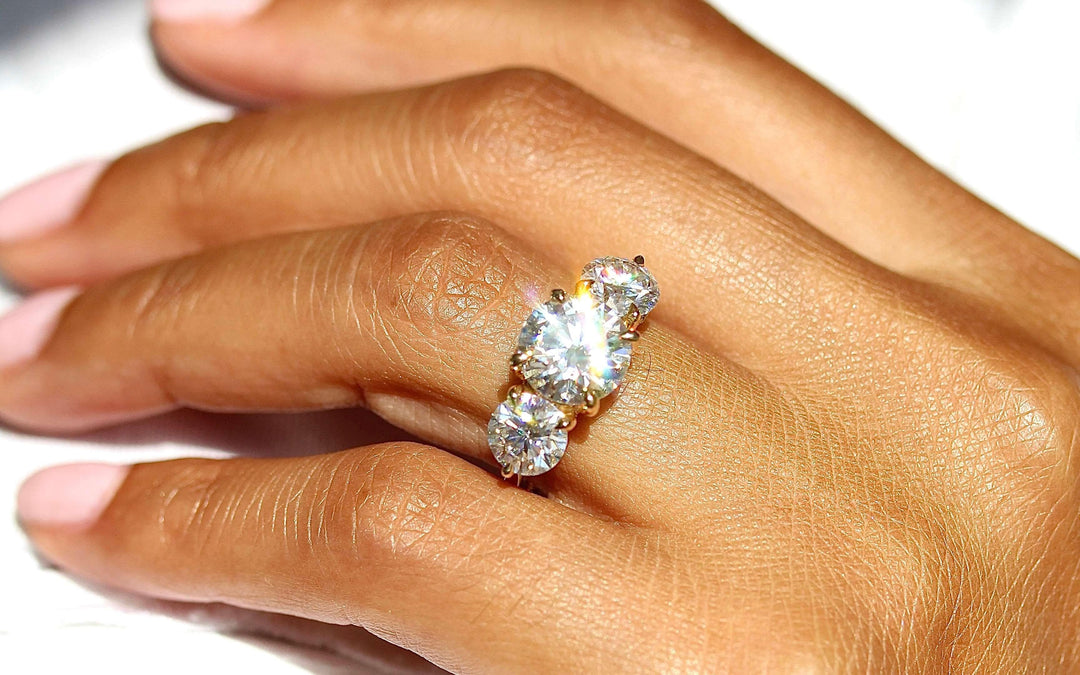
- Three-stone: Three-stone engagement rings feature a center stone flanked by an accent diamond or gemstone on either side. Corrinne and Emery are two examples.
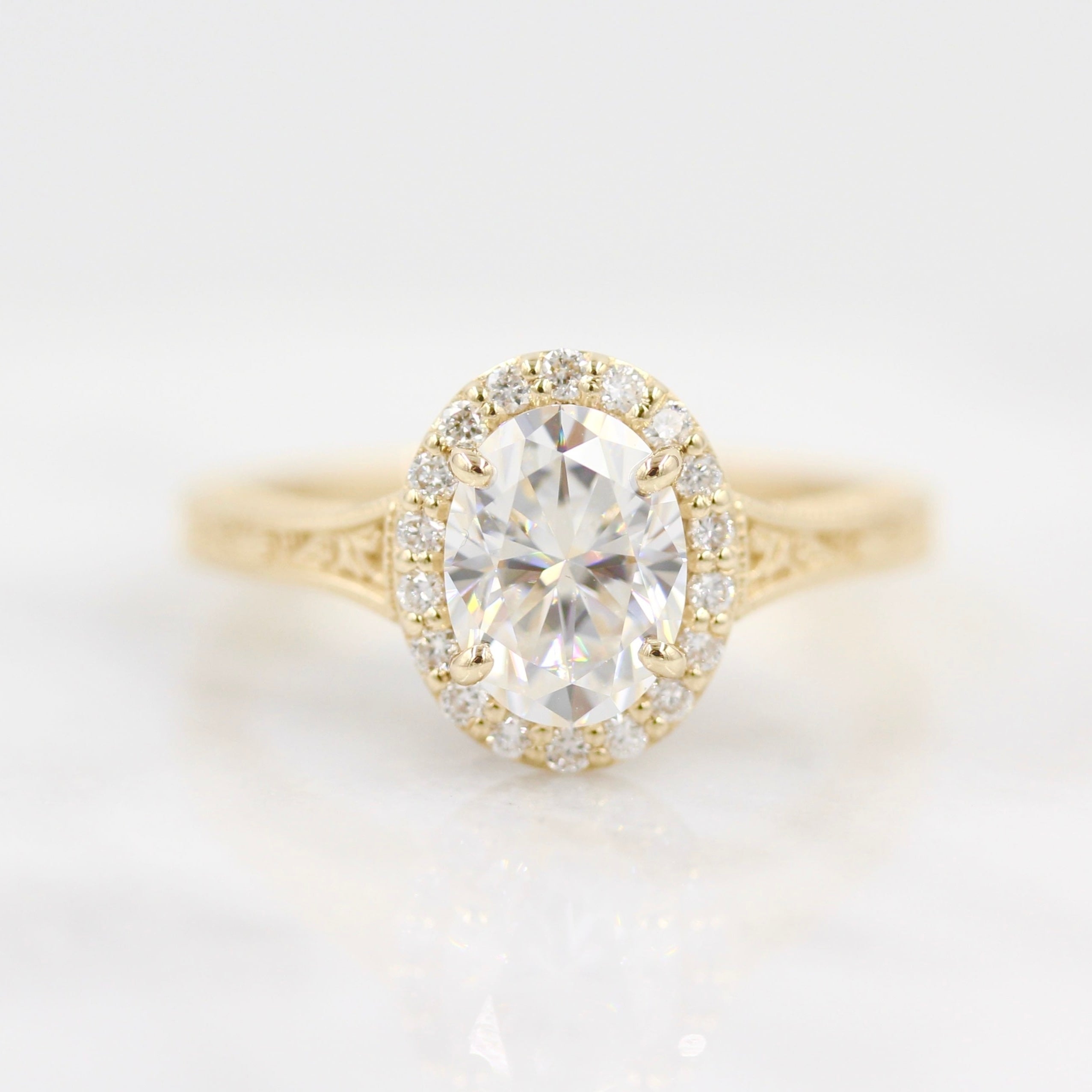
- Halo: Halo styles have a circle of diamonds surrounding the center stone. This makes the center stone appear larger. Some designs also include hidden halos, which are visible from the side rather than from the top.
- Pavé: Pavé diamonds are small diamonds that “pave” a band or other parts of an engagement ring.
- Cathedral: Some rings have a cathedral, which is like two little arms that reach up from the band and attach near the top of the center stone on either side. Our Maya solitaire is a great example.
Head
The head refers to the top part of a diamond ring, including the prongs or bezel holding the center stone and the gallery. This is one of the most structurally important areas of the ring because it supports the center stone.
Gallery
The gallery refers to the design details that are visible from the profile view of the ring (when you’re looking at the ring from the side). This is where you may notice details like hidden halos, decorative metalwork, or other design elements that are not always visible from above.
Bridge
The bridge is the part of an engagement ring that rests on the top of the finger, just under the head. It can be simple and minimal, or it can include accent diamonds, engraving, or other subtle details.
Shoulders
The shoulders of the engagement ring refer to the top part of the shank, nearest the center stone.
Shank
The shank is another word for the band of the engagement ring. It’s the metal part that goes all the way around the finger.
Sizing Area
The sizing area, also known as the base of the ring, is the space at the back that is utilized by a goldsmith when she needs to resize the ring. We advocate for keeping this area free of diamonds and other design elements to allow for easy future resizings.
Other Terms Describing Ring Features
Many of our rings feature embellishments like reverse engravings or milgrain details. Milgrain is a type of metal detailing that leaves tiny beads of gold or platinum, often in a line or border. The band of the Isla Ring is a good example. Metalwork like engravings and milgrain can add a lot of style and flair to a design, making them meaningful parts of a diamond ring. These small finishing touches are often what make a ring feel personal, vintage-inspired, modern, or one-of-a-kind.
Using Your New Knowledge
Congratulations! Now you are ready to dive into all things engagement rings. You are now much more prepared than the average ring shopper, so don’t be afraid to use your newfound vocabulary and knowledge of parts of an engagement ring to wow your audience and find your perfect ring.
If you have more questions about engagement rings, don’t hesitate to reach out to our team. We’d love to help you find or create the perfect engagement ring.