Skip to content





Key Takeaways
- Engagement ring settings determine how a gemstone is mounted to the band and play a major role in both the ring’s structure and visual design.
- The type of setting you choose can affect how secure the stone is, how comfortable the ring feels, and how practical it is for everyday wear.
- Some settings maximize sparkle by allowing more light to reach the stone, while others provide added protection by surrounding or shielding the gem.
- Popular engagement ring setting types include solitaire, prong, bezel, cathedral, halo, pavé, three-stone, channel, tension, and cluster.
- Learning about the main types of settings for engagement rings can make it easier to narrow down options and choose a ring that reflects your personal taste and lifestyle.
Engagement ring setting styles play a significant role in your ring’s durability, comfort, and appearance. Getting to know some different ring setting types can be a great way to get started when finding the perfect engagement ring for you. We’re here to help!
By way of definitions, the setting is the entire physical framework that mounts and secures the center stone to the ring’s band (or “shank”), as well as the band. It encompasses the entire anatomy of a ring with the exception of the center stone itself.
Ring setting types contribute to the ring’s style, but style in this context also refers to the overall artistic direction, visual theme, and personality of the piece. For example, vintage and classic are two categories of engagement ring styles. The style is the overall “vibe” of the ring, and might also refer to an individual design.
As we look at various engagement ring setting types, it’s helpful to note that these terms are not mutually exclusive; a solitaire may have a prong or bezel setting, for example, and it may also have a cathedral. A three-stone ring might also have a pavé band or halo. Since these setting types are named after features of the ring, more than one term might apply.
What Are the Engagement Ring Setting Types?
Now that you have some context, let’s explore the most common engagement ring setting styles.
Some of the most common types of settings for engagement rings are: solitaire, cathedral, halo, prong, bezel, pavé, three-stone, channel, tension, and cluster.
1. Solitaire Settings

Solitaire engagement rings have the most iconic setting. A true solitaire has only one diamond or gemstone. The goal of the solitaire design is to make the center stone the star of the show by avoiding design elements that would distract from its brilliance and beauty.
The term “solitaire" can refer to both a ring setting and a style of ring. The diamond or center stone may be set in prongs (most common) or in a bezel. We’ll discuss both prong and bezel settings in more detail below.
2. Prong Settings

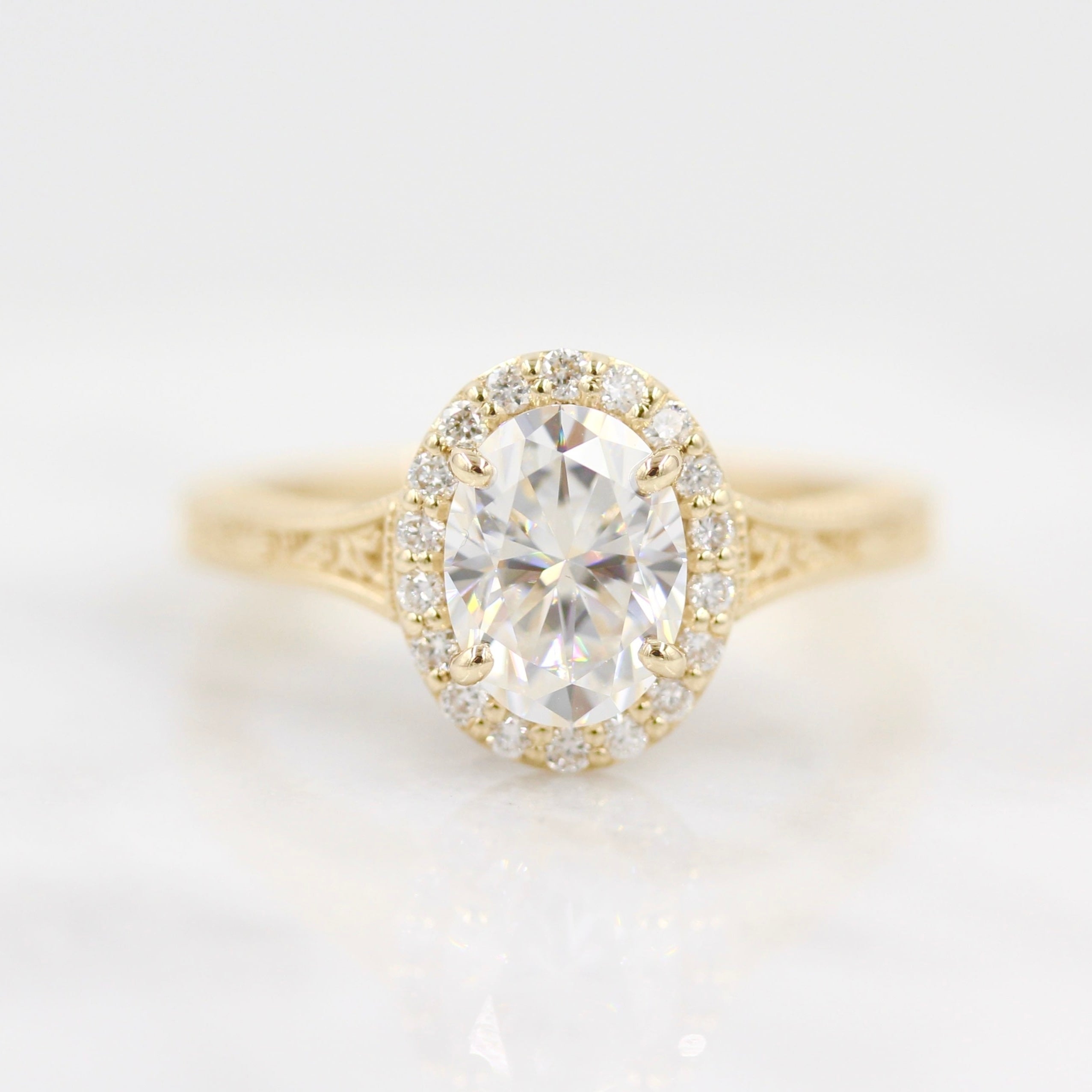
Prong settings are the most common ring setting type. The prongs are small claws or beads of gold or platinum that hold the stone’s edges to keep it securely in place. They are necessary to anchor the stones to the ring, unless substituted by a bezel or other type of setting.
There are multiple styles of prongs and prong arrangements. Prongs might be round (standard) or claw-shaped. And there might be four, six, or even eight prongs holding a single diamond. For example, our Serena engagement ring features double-claw prongs on all four corners of her center stone.
Prongs are a wonderful choice for those who want to maximize the stone’s sparkle. This setting elevates the stone slightly above the ring, and allows light to enter the diamond from all angles to reflect, refract, and disperse with stunning brilliance and fire.
3. Bezel Settings

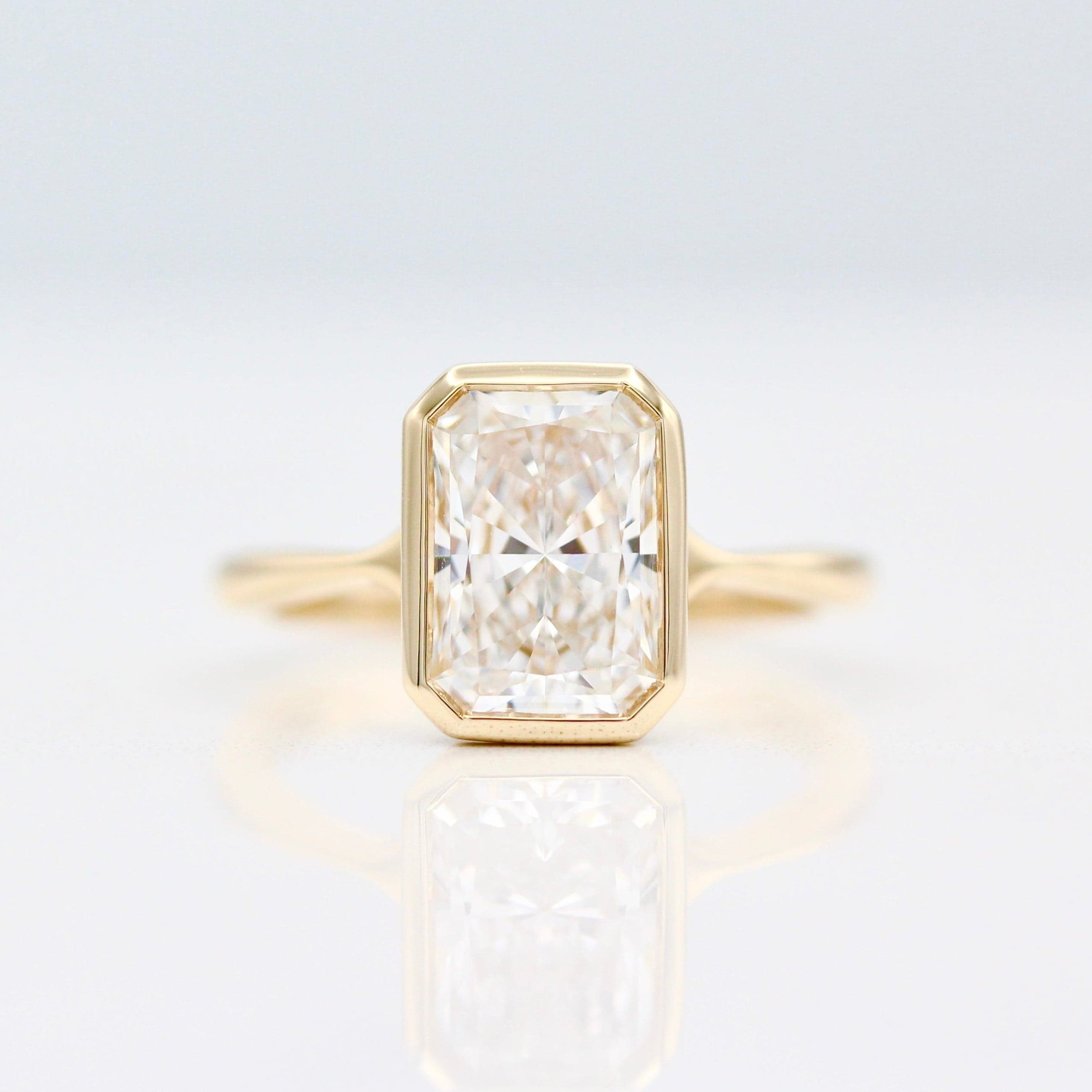
Bezel settings have become more popular over the last couple of years. A bezel is a thin rim of metal that surrounds the center stone, creating a unified appearance and locking the stone in place for unmatched security.
The Stevie engagement ring is a beautiful example of the bezel ring setting type. Her elevated bezel showcases the center stone through arch-shaped windows, while also bringing a touch of tasteful visual drama. Billie is another bezel style that embraces a bold, yet refined aesthetic.
These types of settings for engagement rings can be especially popular among those who lead active lifestyles, as a bezel ensures that the stone will remain securely in place and protected on all sides. Of course, we still recommend removing your ring for any activities that might endanger it!
4. Cathedral Settings

Cathedral engagement ring setting styles are most sought after for the space they provide underneath the center stone to allow a straight wedding band to sit flush with the band of the engagement ring. They often hold the diamond a bit higher than other types of settings.
Gentle, elegant arches sweep up from the band to lift and hold the stone in place. Our Maya engagement ring is a beautiful example of a cathedral ring setting type.
As mentioned above, cathedral settings pair exceptionally well with straight wedding bands, as the center stone hovers elevated over both rings’ bands, providing a flush, uniform stack.
5. Halo Settings

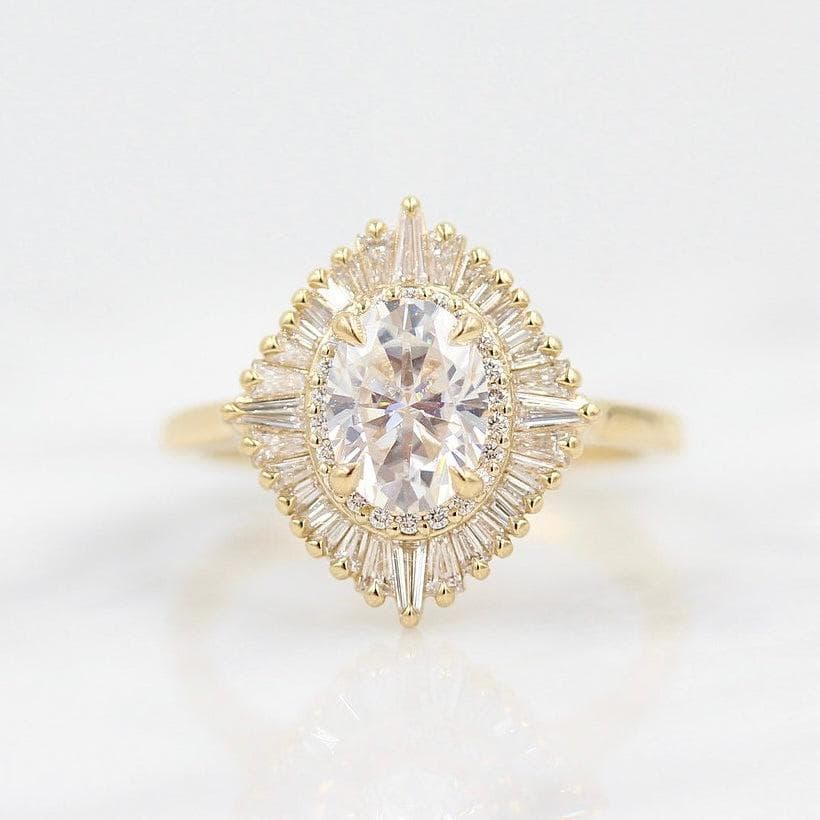
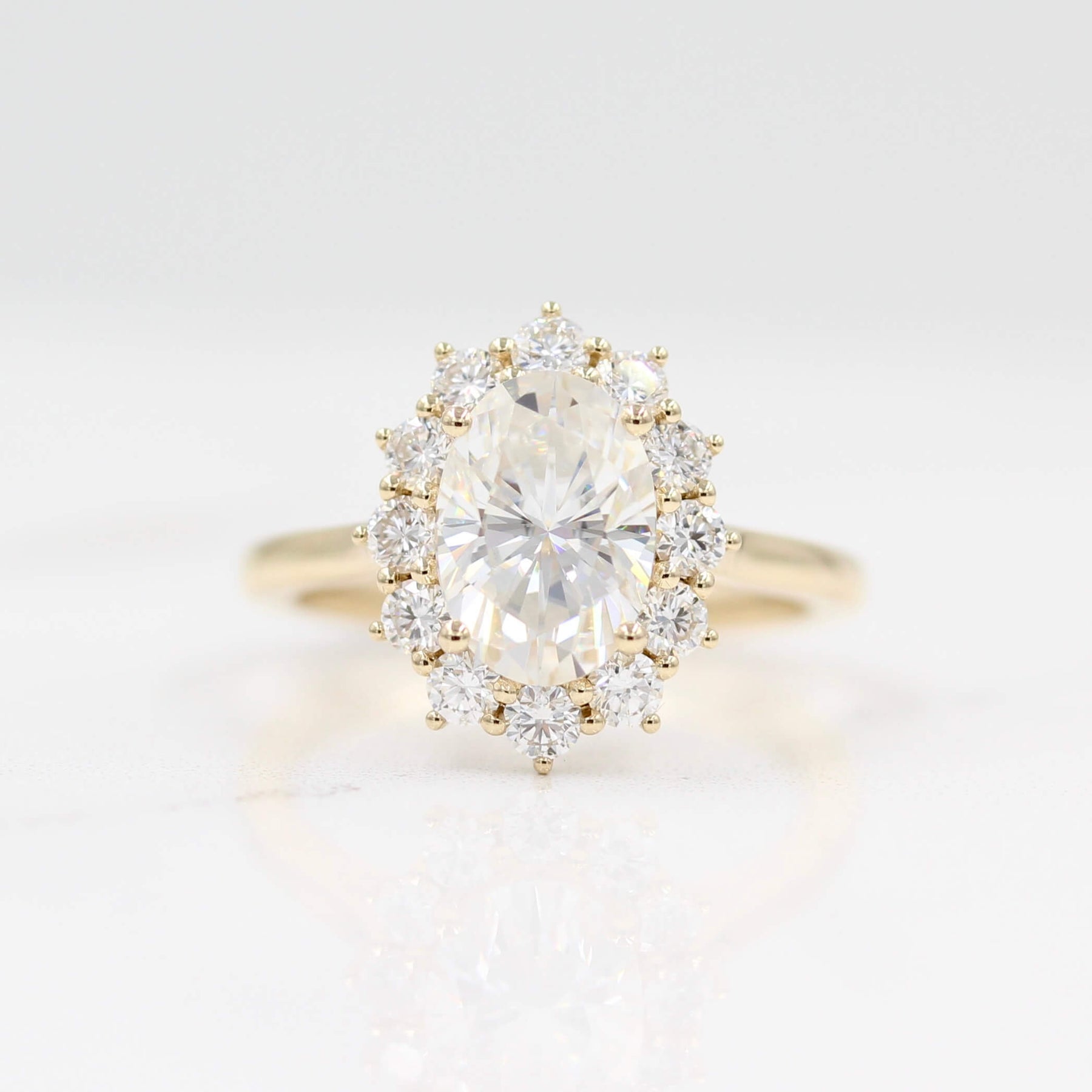
Halo settings are defined by a ring of closely-set smaller diamonds that encircle the larger center stone. This halo effect significantly increases the appearance of the center stone’s size, creating a bold aesthetic that commands attention. Our Sabrina engagement ring is an example of this setting type.
Halo settings often feature a pavé band, creating a seamless look with maximum sparkle, which leads us to our next setting type.
6. Pavé Settings

“Pavé” is derived from the French word for “paved.” These ring setting types feature smaller stones that are “paved” onto the band in a neat line to maximize continuous sparkle from all angles.
These types of settings for engagement rings are perfect for those who want a prominent center stone, but with a more ornate band. Our Paris Hidden Halo engagement ring is a wonderful example of how pavé engagement ring setting styles can create a breathtaking visual effect.
7. Three-Stone Settings

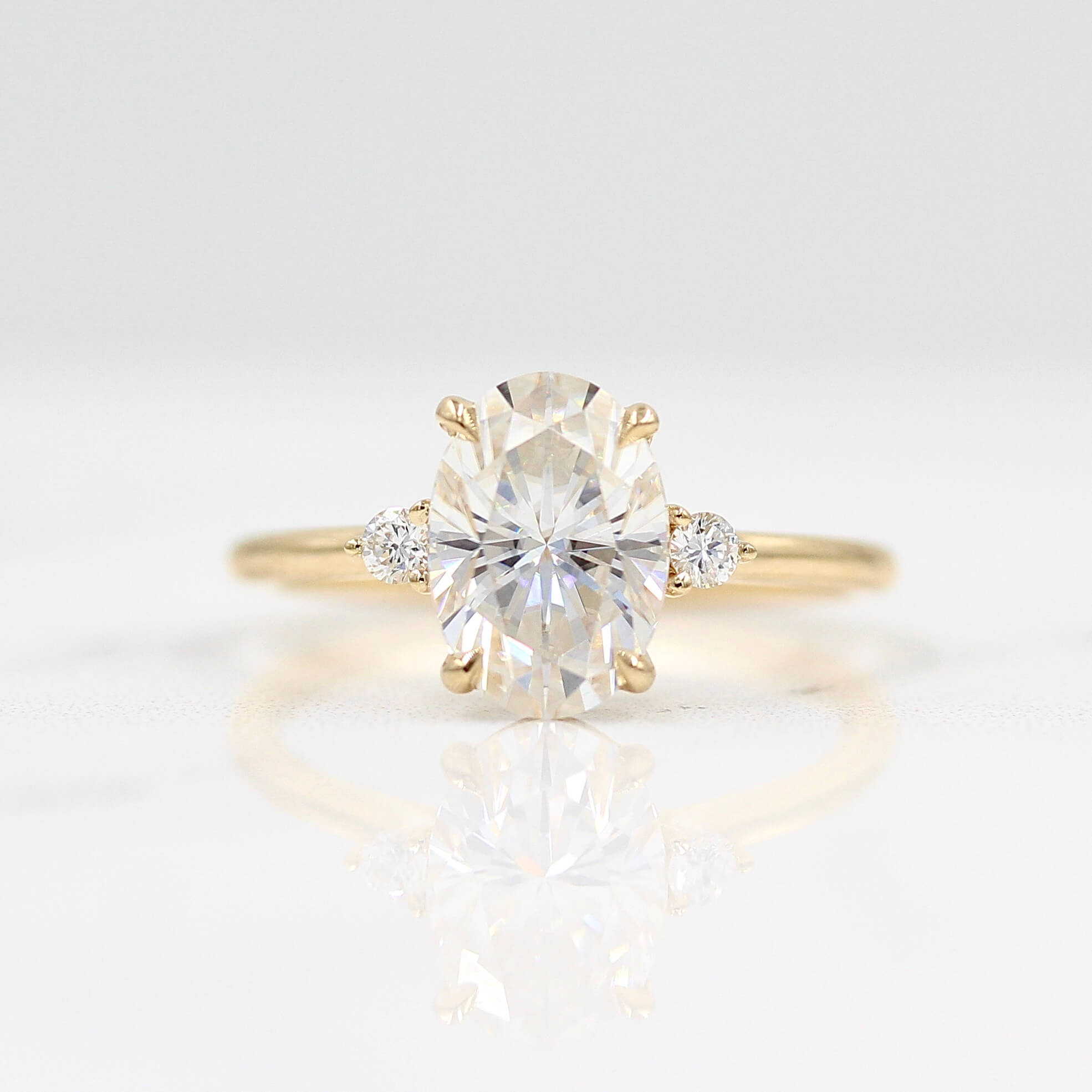
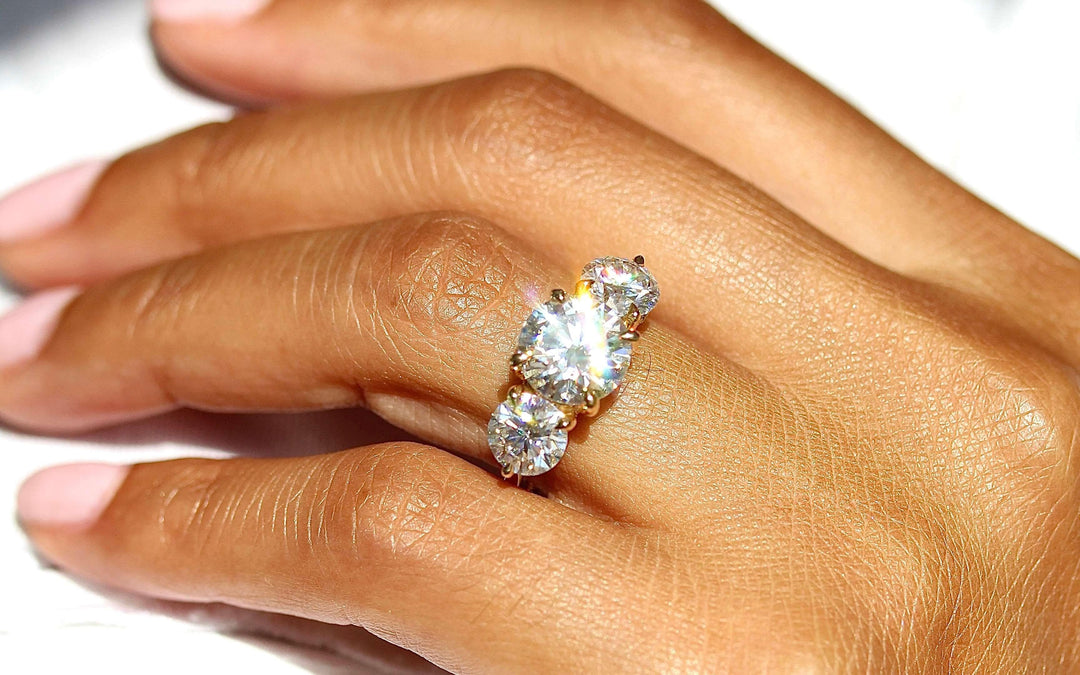
Often serving as a representation of the past, present, and future, three-stone or “trilogy” settings feature a large center stone with two smaller stones on each side.
Take a peek at the Corinne Hidden Halo engagement ring. It beautifully highlights the powerful visual display that’s possible with a three-stone setting configuration. Esme and Emery are other great examples and feature daintier side stones.
These ring setting types are especially appealing to those who wish to combine colors and/or shapes, like Izzy does, featuring a center blue diamond flanked by white diamonds. Of course, the three-stone design can make a bold statement with matching stones, too.
8. Channel Settings
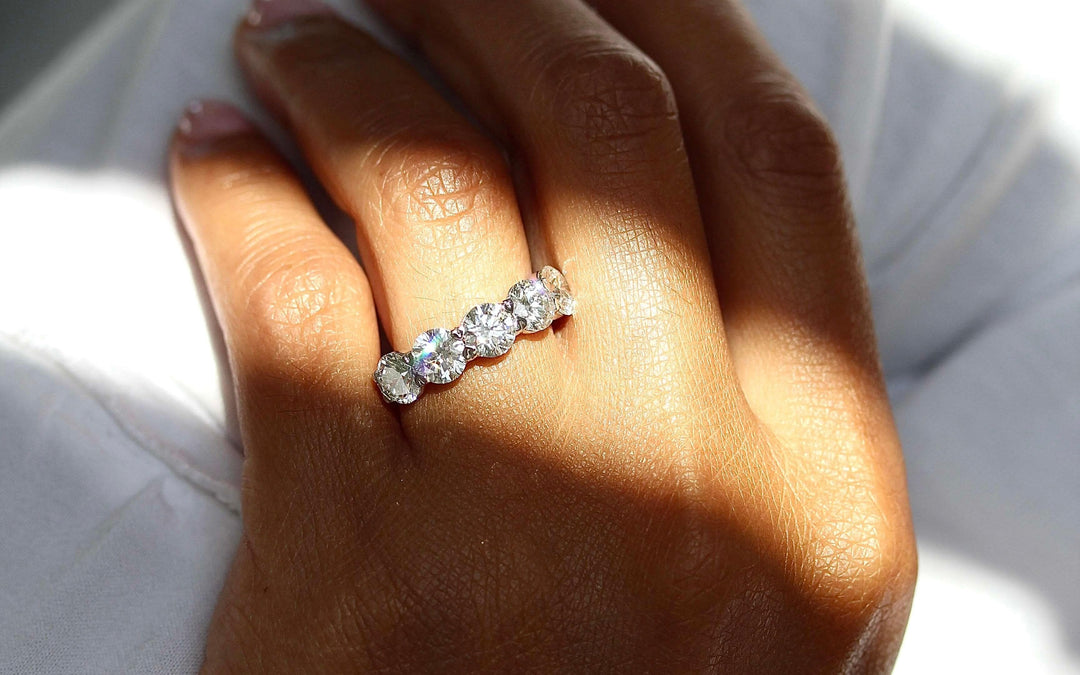
Channel settings have a row of small stones on the band that is secured between two metal walls. Our Elle wedding band features channel-set diamonds. Because the stones sit flush in the channel protected by parallel “walls,” this style is popular among those with active lifestyles. (Again, it’s still important to remove your ring when participating in activities that might damage it!)
Unlike pavé settings, where small diamonds are held in place with tiny beads of metal and sit more exposed on the surface of the band, channel-set stones are recessed within the band for a smoother and more protected finish.
9. Tension Settings
Tension ring setting types can be recognized by the unique visual effect that makes the center stone appear to be floating between the two ends of the band. Tension from the two ends of the band suspends the stone in place. Tension settings are very difficult to repair and size.
10. Cluster Settings

These types of settings for engagement rings feature a cluster of stones in various shapes and sizes that combine to create an extraordinary visual spectacle. Often, they look like one massive stone from afar.
For a quintessential example of the cluster engagement ring setting style, view The Willa ring.
Find Your Dream Ring
At Taylor Custom Rings, we offer a variety of gorgeous ring setting types to suit all tastes and lifestyles. Get in touch if you have any questions or need a personalized recommendation